Showing posts with label road tripping. Show all posts
Showing posts with label road tripping. Show all posts
Friday, January 27, 2012
Signs of the Times
Crossing Isleta land. A weathered sign for "Kerry/Edwards, '04." Another sign, one of those obsequious blue "Adopt a Highway" types that extend nearly as far as the roads themselves. This particular stretch is maintained by the "Atheists & Freethinkers of New Mexico." Wonder what they make of that bizarre new Zionist sign outside Bernalillo, the one with the US, Israeli, and New Mexico flags.
And I roll on...
On the turntable: The Who, "Whos' Last"


Monday, January 16, 2012
Minor Characters

Two days spent tracing the Enchanted Circle, that gorgeous enso that wraps itself around Mt. Wheeler. Through Taos north, pulling the wheel slightly right just below that old church in Questa. The road is clear but the hillsides clung to the week-old snow. Red River came and went, the hotels a testament to a strong vital town; nightly music in the saloons a testament to a vigorous nightlife. The road to Elizabethtown, ice-covered and bad, makes me table plans for a visit. A few piles of crumbling adobe and stone decorate the hillside. Mt Baldy stands tall across the road. Beyond her, Dawson, Cimarron and the plains.
We stop in Eagle Nest only long enough to drop our bags, then move on to Angel Fire. There's a quick lunch at Zebs before separating. I literally drive up to the slope, snap into my gear, and lift off toward the summit. It's late in the day, so I get in few runs. I start on the backside of the mountain, but this proves to be a bad choice as the hill is icy, the occasional hand grabbing one of my feet from time to time. Somehow I stay up. The sun is still lingering so the front side has slightly better conditions. But the lifts stop early, and I'm in my car again by 4.
I warm up with a coffee, then turn off the road down to the lake. It is thickly frozen over, but I show prudence in following footprints and sled tracks further out onto the ice. I pass a few viejos, faces dark and weathered after a long day in the cold. One pair pulls a sled loaded with gear. I'm alone on the lake now but for a few crows that are poaching at the holes the fishermen left in the ice. I stop and look around me. But for the wind, all is still, quiet, white. The last of the sun has streaked the sky above Wheeler with yellow and pink. I want to stay longer but the cold comes quickly on a frozen lake after nightfall. I'll find out later that this was the coldest day so far this winter, dropping well below zero.
Back in Eagle Nest, Miki, Sora, and I cross the street to Calamity Jane's, closed for whatever reason. We find that most everything is closed in this the off season, the high season being summer, when we'd seen the town active and lively. The only choice is a pizza joint straight out of a David Lynch film. It's run by an eccentric woman with an oxygen tube in her nose. She has a very expressive face, but her way of conversation is frustratingly arrhythmic, punctuated by long silences that would make John Cage proud. The shop too is bizarre, the walls covered with signed dollar bills and license plates. Rather than order what we like, she serves us hot wings and slices, the latter undercooked and of the frozen supermarket variety. As we eat, the TV news above us is a veritable parade of murders and epidemics and other fearful things. It not only puts us of our food, but attempts to put us off life itself. Before leaving, I open a door that I think is the bathroom, but instead find a small room partitioned the size of the bed it contains. And Director Lynch says cut.
We're traveling with another couple, the husband Kyle and I have a beer in the saloon, passing through the Old West wooden-floored front section to the back, with its 70's ski resort theme of sofas and stone fireplace. I haven't known Kyle long, so it is good to talk a while with him. We are interrupted at one point by the day bartendress, drunkenly trying to engage us as her husband stands behind her looking angry. The fire roaring on, but our beers played out, we make our way back to our cabins...
...it is still quite cold as I walk the empty streets of town, past the shuttered doors of local businesses. I find breakfast at D&D, a place where I'd grabbed a bad coffee on a road trip back in the spring. The food doesn't thrill either, the butter and syrup putting the chill on my pancakes, and the bacon the same color and consistency as my right shoe. The heater is off for some reason, and not even the coffee has enough strength to warm me. The fellow who runs the place is humorous and entertaining, so I do find some warmth there.
The car takes awhile to get up this morning, but soon enough we're heading south. Through the hills to Taos again, then along the high road to Sipapu. The skiing is better here, but then again skiing usually is better in the morning. I like the narrow, tree-lined runs. Two of the lifts aren't up, and many runs are closed off, so I quit early. I find Miki and Sora by the ski school, then take a couple of the bunny slopes with my daughter in my arms.
Drive down to Mora. I'd taken this road back in October, when the fog had obscured the view of the plains stretching away just to the east. Stop in La Cueva to find the cafe closed yet again. This is the third time, and I won't make the effort again. (But it does continue nicely the theme of food misadventure.) We instead have a picnic in the warm sun above the mill. Kyle and Yumiko head home, but Miki and I follow a side road along a high grass-covered plateau, then drop beside the Mora river out to Loma Prada, a town of some infamy. A town that was born with, and died with nearby Fort Union, it served as a place of vice for its soldiers. Now it is a single road flanked by two rows crumbling bricks.
We drive through Watrous, then Tiptonville, both lesser ghost towns, with only a few ruins remaining amidst newer structures. We don't even leave the car. In Las Vegas now, to find the Rough Rider museum closed. Like La Cueva, it is the third time we've made the effort. I give the door a couple of good kicks, Miki throwing me a frown. I love my home state, but am sometimes frustrated by how shipshod many things seem to 'run' here. Nearing my return to Japan, I feel strongly that I'm done here, ready to return to that land which operates with machine-like precision. (For better or worse.). Slightly frustrated, slightly bemused, we turn toward home, bringing to a close our final New Mexico roadtrip.....
On the turntable: Joe Walsh, "You Bought It, You Name It"
On the nighttable: Edward Abbey, "Confessions of a Barbarian"
Thursday, December 15, 2011
Simple Twist of...

John Steinbeck's most famous line has the ring of Shakespeare, but was in fact penned by that Great Scot, Robert Burns. And it rings too in my world, in particular when I spend time with my friend Taylor. Most of our hiking plans tend to change while afoot, but it is in a car where things really "gang aft agley."
I'd long awaited the Matachines dances at Jemez Pueblo, but the weather forecast predicted snow. The day was in fact somewhat warm, so what did precipitate was a rain that aspired to a softer beauty. We drove south, through the more scenic La Cienega backroads, meeting the freeway briefly before leaving it again at Algodones. Not far off was the ruins of Kuaua, whose crumbling bricks lined the western banks of the Rio Grande, paralleling the high, winter-bare cottonwoods on the other side. We walked the ruins in the light drizzle, sadly denied the pleasure of entering the kiva whose walls were decorated with the colorful restorations of murals centuries old. I remembered them well from a visit 20 years before, on a day of similar weather. But we otherwise occupied ourselves with a few thrown snowballs and a stroll down to the river bank, dreaming of future picnics.
A short drive north brought us to the shadow of White Mesa, the name resonating by the minute due to the falling snow. We had our aforeplanned picnic in the car, the wiper blades occasionally returning the view to us. On the way to Jemez, we made a brief errand stop at the post office at San Ysidro, whose postmistress surprised us in being East Indian. She was a friendly and chatty woman, oft so caught up in the talk that she made three mistakes processing our post, quadrupling the time it would normally take. Ironically this delay conspired to cause us to miss the Jemez dances altogether, which were brought to an early conclusion due to the weather. Miki and I were astonished, as the identical thing had happened a month before at Tesuque Pueblo. We had heard the drums on our approach, but by the time we entered the plaza itself, the dancers were moving away. Bizarrely, these were the two times that we had actually planned to attend a dance. The dances that we'd seen at Zuni and Hopi, had merely been random visits to the villages, but we'd been treated to a wonderful surprise.
Back in the car, Taylor and I talked of fate and those sequences of events that oft go awry. It occurred too in Jemez Springs, where a hot drink was nowhere to be found in a town closed early. A coffee may have brought some subconscious comfort on a day now gone to snow. We were traveling along Route 4, to examine the damage of the previous summer's fires. But snow blanketed all, clouds kept the adjacent hilltops just out of view. (I am pleased to see that LasConchas, one of my favorite places in New Mexico, seems to have survived, with the real damage on the other side of the road.)
Fate then decided to show a kinder face. A group of wild turkeys scurried through the drifts. And just above Los Alamos, we spied a herd of elk at least a hundred in number. Had we followed our planned itinerary, I doubt we'd have come across them. We stopped to watch a long while, the elk moving slowly and calmly through the snow, grazing, grazing. I stepped out of the car to pee, moving quietly into the trees. A bull with a massive rack of horns turned his great head, a few dozen meters away. Then a trumpet called from deeper in the forest, and the whole herd moved as one, a mass of gray shapes making for the hilltops. And I stood there paralyzed, as these animals, the smallest of which is at least twice my weight, hadn't made a sound. The whole scene had a magically quality to it, a serenity that I'm likely to revisit in future meditations.
Then as if in punishment for altering the fate of the elk, ours too took yet another turn. We hit Los Alamos proper at a hair past five o'clock, to join a long line of cars moving steadily toward a steep hill made perilous in the freezing rain. What would normally be a 45 minute drive was tripled. And as we inched along at 4 mph, we had ample time to weigh in on the fickleness of fate.
On the turntable: John Lennon, "Double Fantasy"
On the nighttable: Frank Waters, "The Man who Killed the Deer"
Thursday, November 24, 2011
Anatomy of a Roadtrip

Late morning, and we pass through the same intersection we passed a few days before, along Highway 64, that gorgeous stretch of highway through some of New Mexico's most beautiful features. Heading north this time, toward the half buried marble dome of Mt. San Antonio, glazed this season in blue and white. A single structure is dwarfed against its massive face. What is it like to have this mountain as your backyard? (This scene will be repeated north of Crestone, with a lone ranch set against an impressive stretch of range, the earth rolling like the tideline to rise in a syncline toward peaks snow covered above 10,000 feet.)
Over the Colorado border, and it's usual dramatic change of scenery. The land looks livelier than in New Mexico, but how could it not, considering the amount of water than moves through this, the San Luis Valley. We pass the train cars of the Cumbres and Toltec railway, resting until next spring. Into Alamosa finally, eponymous Keens on my feet, worn for the irony. Stop at San Luis Valley Brewing Company for a fat burger and a sampling of nine of their brews. Sora plays with her mom on the leather sofa, thick and aged and of the kind more often seen in some wood-panelled room in 1890's London.
Miki takes the wheel as my head swims with beer. After a pair of U-turns, (I had left my phone plugged into the brewery's wall), we take a long thin straight road that doglegs left just before ramming into the Sangres, passing in front of the Great Dunes that look ready to break across our road, repeating the water metaphor once again. Shadows are thrown by the wrinkles carved out by the wind across their faces. These dark spots contrast dramatically with the snow sitting a thousand feet higher atop their granite progenitors. Against the perfect blue sky, the range looks like it is a paper cutout done by a child, albeit one who has poor scissoring skills. I myself was a child when I first saw this scenery in a book on National Parks, read in my New Jersey home where what I saw out the window looked nothing like this. Now to finally arrive many decades later, fighting a strong wind that keeps us down on the flat of a dried riverbed. The baby cries due to the wind, so our visit will have to remain brief. From inside the car, I console myself with the sight of a lone figure standing atop the highest dune, a mere flea against its mass.
North again along the Cosmic Highway (man). The Sangres finally rise to meet us after shadowing us all day. Wriggling through a narrow canyon to land in Salida along the Arkansas River. Miki and the baby stay at our rented cabin, but I make a five minute drive into town to investigate more beers at Amica's. There's an IPA there that is one of the best brews I've ever had, a seasonal that the staff knows nothing about. But I appreciate the mystery. It's like the smile of a passing beauty, a smile that launches the fantasy of an entire love affair, a lifetime lived out in mere seconds. This beer piggy-backs those I drank at lunch a few hours earlier, maybe the cumulative total of what I normally drink in a month. I'm far too drunk to drive. So I walk the town awhile, and finding a Chinese place, I grab some take-out for Miki. While I await its preparation, I stand in the doorway, catching up with an old Denver friend on my phone. I must appear suspicious to the waiter at the restaurant, who, when handing me my food, says a curt," Thank You. Goodbye." The cold and clear mountain air has helped clear the alcohol from my brain, and I make my way back to my car, driving slowly and cautiously back to the cabin...
...a quick stop in town in the morning for a coffee. The owner is a ramblin' man ready to ramble again. After a few years in town, he sold his cafe a few days before. Our own road takes us along the Arkansas heading east, in and out of canyons and through dozens of small towns. I've recently been reading about this river and its history, it having once served as the boundary between the US and Mexico until 1847. Now the river is a popular place for rafting, operators strung along the banks for many miles. The roads eventually lifts high above the waters, and we weave through the lessor Rockies toward Denver. We drive up to the Royal Gorge Bridge, but balk at paying 30 bucks to cross. The road north takes us through broad valleys many with ranches at their navel. As we drop into the trough of one hill, we scare up a murder of raven and magpie, startled temporarily off some carrion. Amidst them is a wolf, that eyes us warily as we speed past. Miki and I are of course thrilled, having never seen one in the wild.
We make a stop now at Florrisant National Monument. There isn't much here, but it is a pleasant walk out on the valley floor, slaloming between fossilized tree stumps. This had been a major tourist stop a hundred years ago, but today it belongs only to the three of us.
Heading northeast, the home stretch. A ranger had told us of a beautiful drive along some backroads into the Denver suburbs. We follow her directions, the road narrowing more and more the deeper into the canyons we go. We're only a few feet above the Platte River, which roars past at a speed far greater than our own. The ranger had told us that the road was paved, but the asphalt ends eventually. It stays well groomed, but would be a brutal trip in the snow. We pass the odd house, the occasional settlement. Most welcome are the signs saying that this is indeed the direction of Denver, up ahead somewhere. We need to get to the Japanese Consulate by four, and have plenty of time, but it seems we're somewhat conspired against, especially when we're forced to drive behind a road grader at 5 mph for awhile. Where the road widens slightly, I pull the car around it, and before long we reach the highway again, with the glass towers of Denver glittering on the plains below us...
...we pass a few days in Boulder at my brother's place. My niece is sick, so we rarely leave the house, our time consumed with books and food. On the last day, my brother flies off to NYC for a wedding, and we watch his daughter. Better now, she takes us out into the open space below the foothills, where prairie dogs have built a massive colony. The residents are active in the warmth of the final hour before the sun drops below the hills and the shadows bring the chill. The call of the prairie dog is wonderful to hear, as they stand on their hind legs and raise a banzai to one another. Our presence is what causes this, of course, as they signal across the grass about the approach of the two legs, who laugh at their earnestness. For me, this will be the highlight of the trip, along with the Gary Snyder reading later that night. (I wrote something on that here.)
...southbound, and a quick stop at the consulate again. Despite their promise, they've forgotten to make Sora's visa. Apologetic, they do it in 20 minutes. We are happy of course, but puzzled. Their policy is that this process takes 10 days, and usually requires two trips. Yet they've just proven that it can be done on the spot. Very Japanese, this. Rules over reality.
We move along through wealthy Denver suburbs and out into the prairie, a drive uneventful but for the tall cottonwoods that occasionally rise above the road. We make La Junta by lunch, eaten out before the massive Bent's Fort, standing proudly beside the Arkansas. We spend the next hour wandering in and out of the fort's many rooms, the thick adobe walls holding the chill. I imagine that this would be a fantastic posting for a ranger, living on the spot that was the center of so much western history, and hosted some of its biggest names. It is peaceful here, standing by the fire and looking through at the trees bare for winter. This whole region intrigues. I hope to come back and explore more.
Hills roll us toward Trinidad. It is near dark when we arrive, so we skip the looked-forward-to stroll. We compromise on a meal at an old hotel, but it is a pricey, meat-heavy menu, so I reward myself with a single pint and peanuts and get back on the road quickly. Over Raton Pass into New Mexico again, moving toward home, under the crisp and star-filled sky...
On the turntable: Tedeschi Trucks Band, "Revelator"
On the nighttable: S.C. Gwynn, "Empire of the Summer Moon"
Friday, November 11, 2011
De Los Muertos

In this season of Halloween, I find myself not quite done with ghosts. On the dark morning of Day of the Dead, the girls and I headed back toward the north and east, to visit a handful of towns in various stages of abandon. Snow falling thickly as we drop to the bottom of the valley of San Geronimo. The winds swirls the flurries around me as I walk around the old adobe church, its color a profound red against the frosted grass. The creek beyond flows fast despite the falling temperature. A gunshot sounds up in the forest, somebody hunting perhaps a rabbit for stew. A quick stop at the cemetery back on the mesatop, to walk the juniper and look at the wildflowers growing pale as they die. Weeds rise sturdy from dried cow paddies. The sky is beginning to open up, revealing the nearness of mountains just west, peaks socked in higher up.
Driving down the razor cut road down toward La Liendre, thankful for the blacktop, but eying warily the long drop to the left down into Canon de Agua. Where the road bottoms out, a well-groomed dirt road takes us to a stream crossing, which makes for a good picnic spot. The Gallina river is flowing fast today, its tall cottonwoods bright with color. Cows graze on the other bank, between the junipers. The beauty of his place doesn't seem real, having the perfection of a film set. We feel lucky as not many make the trek out here. But the wind is cold and strong, so we eat quickly, then go up to the town site. There is little left, just a few structures crumbling back into piles of brick. In other places, raised platforms of dirt hint where other homes once stood. It is amazing how fast this town is turning back into desert. There had been a post office here as recently as the 1950s, but in a decade or two, there will be nothing to suggest that dozens of families once lived here. There is a certain pathos to this. When we think of the history of a place, it is usually a collection of events detailing what occurred there. But each of these stone foundations represents the history of a person, the history of a family, each with its own story of hope and eventual despair.
The next place adds a piece to my own history. After a long 50 mile drive toward Tucumcari, I found that the town of Trementia to be barred behind a locked fence. This is supposedly one of the nicest ghost towns in New Mexico, but new owners must have acquired the site, something not mentioned in my 2003 guidebook. There is a older set of ruins a mile away by the river, but they're fenced in too, barring our welcome. I would have no qualms about climbing through the barbed wire, but for the baby. We satisfy ourselves with a mere glimpse, then drive the 50 miles back to Las Vegas. It is not a whole loss, as the drive takes us through some lovely canyons, the taller buttes crowned with exposed rock like bathtub rings, proud reminder of when all this was under the sea.
And finally, up to the hot springs below the Montezuma Castle ruins. The highest 'tub' is the hottest, and here I bob awhile, my tingling feet barely connecting with the bottom. The tubs are mere circular shapes cut from concrete into the hillside, overlooking a stream and the woods beyond. It is the perfect way to cut the chill from the day, an act that recognizes the fast approach of winter.
On the turntable: The Kinks, "One for the Road"
On the nighttable: Raymond Otis, "Miguel of the Bright Mountain"
Friday, November 4, 2011
My Life in the Bush of Ghosts
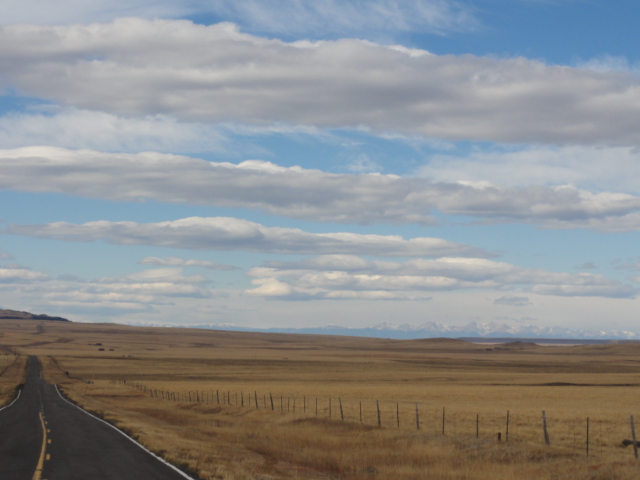
...This morning, my clothes still smell of smoke. Last night, I'd kept the fire low, since the speed in which the kindling lit was a hint at the lack of recent rain. It had been dark when I'd arrived, but I was able to set up camp quickly, eating dinner before the cold came. When I'd pulled in, a man and his son stood beside their RV, the senior pointing his rifle into the desert. Elk hunters. I'd seen many during yesterday's drive. I was disappointed to find others here, had hoped for solitude. But I'd placed a tree between them and me during the night, and despite it still being early, they were already gone. I eat my breakfast alone but for the lowing of cows a few bends downstream.
Stomach teased but not satisfied, I drop down to Carrizo Creek, and follow her waters a mile or so upstream. The morning is rich with birdsong, the trail flecked with the trident footprints of an opossum or raccoon. The trail leads me through the high reeds that give this place it name. Some of the cliff faces have fallen into the water, witnessed perhaps by the cottonwoods that look centuries old.
Back up into the Comanche grasslands again, these straight roads beginning to tire due to the monotony of landscape. The only features are the occasional grove of high trees, marking a town or a homestead. In most cases, the trees are alive, but the homesteads are dead. The trees of the greatest height reveal the age of some of these places. Many are near the Santa Fe Trail, to which I'm still running parallel. What I've driven in a day and a half took weeks for the wagons. It is little wonder their excitement to see the mound of Rabbit Ears near Clayton, the first of the hills that would multiply into the eventual heights of the Sangre de Cristos. At one point along the road, I find a small settlement, abandoned. Painted on one house are the words, "Andrix Community. Gone but not forgotten." It seems it hasn't happened too long ago. A reasonably new bicycle leans against one wall. Others don't want to go so willingly. Farm after farm have the signs, "Not for sale to the Army." The military is looking to expand an existing base which if implemented, would do away with both the Grassland and the private ranches, effectively displacing 17, 000 people. An interesting parallel with how the Army drove William Bent away from his own trading post 15o years and 85 miles away.
Mid-morning I pull into the general store at Kim. I wonder at this town's namesake, most likely a woman known to its founder, whoever that was. But I can find no history on it, so in my mind there is no reason that it couldn't have been named for a Korean. I stop for a cup of coffee, and am disheartened slightly that I could've had pancakes for less than I'd paid for the lousy camp breakfast I'd had. A couple of the diners here wear fatigues, making me mistake them for military, perhaps scouting some of the ranches. A second glance reveals them to be elk hunters.
West of town, a sign tells me that I'm officially leaving the Grasslands, and within a mile, the land begins to roll then get carved up into canyons. The reddish-brown of junipers begin to pop out of what had formerly been merely a dull green. To my immediate left are the cubist hills of New Mexico; fifty miles further on, the jagged snow-capped peaks of the Colorado Rockies. I turn south toward the former. There's a dramatic change at the state line. One mountain rises striated with green fields like the world's most challenging golf course.
The road takes me through a lovely series of canyons, then plops me square into Folsom. It's a quaint little town on the edge of the prairie, with good running water and plentiful trees. The Post Office sees the only activity, the remainder of the buildings on the main street mere facades, long abandoned. One small shop is a museum. I try to ring the curator, but our poor phone connection prevents me from asking her to come down and let me in. I'm growing hungry, and not finding any place to eat, I give up, and begin the long climb up to Johnson Mesa.
It is a beautiful drive, winding up the hills, the road lined with juniper and oak. Somewhere in the riverbed below me lies the spot where Folsom Man was found in 1908. Atop the Mesa itself are a few homesteads, usually abandoned in winter due to the heavy snows up here. The north side of the mesa is framed by low mountains, and glimpses between them reveal long drops into Colorado. I stop awhile at the small church up here, then drop quickly down toward Yankee, then Sugarite. The old Ensign Mansion lies in ruin amidst the scrub. It won't be long before only the chimneys remain. Sugarite too is disappearing into the brush. There are ample ruins here, but they consist of little more than squared foundations of brick. The signs are plentiful and informative, and it isn't hard to imagine a what had been a sizable community until the dawn of WWII. There had been many Japanese here, clustered up on what is called Jap Hill, and when the coal mines closed in 1941, it isn't hard to imagine where they went. I climb above their part of town to the mines themselves, now a mere arch of brick around the tunnel mouths. There isn't much to see, and numerous mountain lion prints makes me nervous, so I descend quickly. I spend close to an hour talking to the Ranger, who had done a Masters at Naropa. I'm disappointed to find that the Soda Pocket Campground, supposedly one of the nicest in New Mexico, is closed due to the fires of this summer. It is a slight relief though, as the campground is known to host at least 5 resident bears, who would by now be in the last stages of pre-hibernation feeding, made even more aggressive due to a habitat shrunken by fire damage. Plus, the sky is turning ugly, with snow on the way. After a quick visit to a small lake up on the Colorado border, I turn toward Raton.
I don't spend much time here. I take a very late lunch in town, alone but for a woman at the next booth, attractive in her 50's, and provoking the weather in her tight T-shirt and shorts the length most often worn in junior high school gym class. She's midway into her second Corona, which gives her the nerve to flirt with me. I'm flattered, but more interested in my book on ghost towns. She leaves her beer half full, then wanders out to walk up the road toward the off-highway motels. She's obviously trying to hold at bay the loneliness that I am personally trying to explore. And I find it in its full expression at my next stop, the cemetery of Dawson. The hillside below the mesas here is pockmarked by graves, the greatest collection of which are rows of identical white crosses ringed by a low fence. Dawson was of the largest of New Mexico's mining towns, and one of the unluckiest with two terrible disasters that killed the more than 400 men who lie under those white crosses. Their number is staggering. I walk above them, amongst the older graves. There must be over a thousand here, from a town that saw 9000 residents at its peak. Now the town too is a ghost. Later I'll be surprised by photos I'll find on the internet. This was a huge town, with broad streets, a bowling alley, a movie house. Today there isn't a single hint of anything but for these graves. One plot stops me completely. It bears the grave of an infant. Next to it is the mother, who died 58 years later, and was buried here long after Dawson itself was gone. The marker before the grave says, "Reunited." I too carry grief for my own lost child, and can feel the grief of this mother, who held her child in her heart for 58 long years, wanting to meet again in heaven. Surely, she must've had other children, and lived out an entire life in that 58 years. But she never forgot her lost baby. With tears in my eyes, I look toward the river below this cemetery and the trees in their full majesty of color, as they too move toward their deathlike state for winter. I talk to the dead. "Can you all see the Cottonwoods down there? Aren't they beautiful?" This road trip had been a seeking out of lonely places, yet it wasn't until I got here that I was finally alone, despite being amongst perhaps 1000 people in eternal repose beneath my feet...
...there was more to my trip, but it peaked there on that hill outside Dawson. I spent the night in Cimarron, in the Wyatt Earp room of the haunted St. James hotel. I had a meal, a beer, a bath. I passed a restful sleep just across the hall from a locked, scratched up door to a room reserved only for a resident ghost. In the morning I saw a photo that I am glad I hadn't seem before retiring, of a spooky mist floating a few feet above the bed where I lay. This morning, the sky had its own mist. The snow had kept to the higher peaks but rain accompanied me on my walk through town. I drove out, into a landscape of great variety with its trees and valleys and hills, but the clouds kept a low ceiling, flattening the impact as if I were in the grasslands again. There were a few brief stops. A museum at Philmont. Buying soup mix at La Cueva. Lunch at Sugar Nymphs in Penasco. Coffee in Dixon. And the sun finally came out, finally warming the body in its unheated 4-wheel drive casing, and the thawing of the heart coming only with the embrace of wife and daughter, and the return home.
On the turntable: Om, "God is Good"
On the nighttable: Frank Applegate, "Indian Stories from the Pueblos"
Tuesday, November 1, 2011
Who's Gonna Know Your Grass?

Wake before the light and drive off into the dark. Even in the pre-dawn, I can just make out the smoke-filled valley behind Atalaya, the site of recent controlled burns. The mountain is backlit slightly, as if there is a city beyond the ridgeline. Below the high mesas of Glorietta, the sky turning gold to the east. Not far now to Las Vegas, the true gateway to the grasslands. To the right, the horizon flattens out. To the left, my shadow begins to appear, then lengthens. The sun on my face is a welcome relief, for the heater in my truck isn't working and does nothing against the chill of the morning. The higher peaks of Wheeler are already snow covered. Though lower in height, Hermit Peak stands as true sentinel. Near the cottonwood oases near Watrous, I pass a convoy of trucks carrying the massive fang-like blades of wind turbines. This march of progress passes a empty homestead just off the road. It looks recently abandoned, the cattle pens, water trough, and wind mill still intact. In the distance, the tell-tale shape of the mesas gives the town of Wagon Mound its name. I wonder what the Comanche once called it. The town is hazy, as the ground is heated by a sun now directly in my eyes. Not long after, I'm through the Canadian River valley, and arrive at the true grasslands.
I slow as I pass through Roy. Bob Willis once cut hair here before he became famous for other things. I take a second lap through town until a couple of songs of his play out on my speakers. I have a couple choices of roads from here, and I take the one that looks most remote. It is a zig-zag route to the northeast, the paved surface narrowing and bisecting fenced-in land of such a scale that I can see no homes or structures but for the town of Yates, empty and rotting on the prairie. As I drive on, hundreds of locusts jump into the air, many of them into the path of my truck. I think of fate, and the fact that my choice of roads has contributed to this genocide. I slow some, but it doesn't help. Finally, I come to a complete stop in order to pee. Standing beside the road, I take in the emptiness, and how small I've become amidst it.
Late morning, and I arrive in Clayton. The town has long broad streets, and its heart is still in the 50s, with an old hardware store, a movie theater, and a hotel of an even older vintage. I walk around a little, popping into a thrift shop whose door plays "Dixie" as it opens. The books are all on sale for a dollar or two, most of them religious texts. In front of the town bank a flag flutters bearing the likeness of Black Jack Ketchum, notorious train robber who died on the gallows here. He may have once eaten in the saloon of the hotel, whose menu and selection of microbrews on tap is pretty progressive for such a remote town. The bartendress brings my filet, the meat tender from years of walking the prairie not far away. As I eat, I overhear the bartendress telling one of the staff about how just last night she broke the heart of a regular customer, one who wanted to keep her and build her a house. Such are the trials of being an attractive single woman in a lonely country town. As is dealing with the flirtations of a couple of cowboys who come to sit at the table next to mine. As she deftly fends off their attention, I notice the broadening of her accent. Much as mine does when I later order a coffee, in the attempt to ward off sleepiness brought on by the beer.
After lunch, I drive out to the lake to see the dinosaur prints. At least eight different animals passed across the mud flats at the lake's east end. A sign tells me that one of them had been a baby, pursued by two larger carnivores. Considering I've got a newborn at home, I find myself worrying about the little guy. As I walk around the flats, a lizard runs across, then scurries into a nearby hole. I wonder if it feels an sort of connection with this place. I stop, and look at the sky. The wind is picking up dramatically, but there is not yet a hint of the storm that is due to come in, not a cloud up there.
Keeping up the dinosaur theme, I fill my tank at Sinclair. Moments later, I'm forced to stop at the only stoplight in all of Union County. Ten minutes down the road, I'm in Texas. Despite having many friends from here, I have a bit of a thing about this state. Being a New Mexican, I'm all too aware of the poor behavior of my neighbors. But I'm strangely drawn to it, find myself wanting to like it. As I drive away from the only Texan town I'll see today--Texline-- I turn on a special mix I've prepared for this part of the drive. I sing along. "Deep in the Heart of." "Yellow Rose of." But my own yellow rose is back in Santa Fe. I pass many old abandoned farms with their rotting cars and trucks that shined new in the '40s. I pull into a grove of cottonwoods standing tall amidst all the grass. Thompson Grove. I sit and drink my by now cold coffee, admiring the bulletholes blasted through the trash can that has obviously been a threat to somebody. Turning my head I read a sign that warns me that rodents here may be carriers of plague. Plague! Within seconds, Thompson Grove is in my rearview mirror. In about ten minutes I cross the state line.
Oklahoma, what's the deal with your roads? I bump and shake my way north across the panhandle. The corn alongside the road is rotting on the vine, nowhere as high as an elephant's eye. The town of Boise City is a mere roundabout, with an old brick building at it's center. The signs confuse, so I pull over and become a spoke radiating from its center. As I attempt to pull up a map on my cell phone, a farmer pulls in beside me and asks if I need something. After he points me the right way, he tells me that my truck is in a dangerous spot. What I'd assumed was assistance was more a rebuke. The drive east is amidst industrial farms and small oil production facilities. The land is nearly destroyed, some the worst desertification I've ever seen. I'd heard that the recent drought rivals that of the Dust Bowl, into whose heart I am now heading. Due to that event, these National Grasslands were created, as means of encouraging a more sustainable means of prairie management. But the state of the land makes me question whether any lessons have been learned. And coupled with the current economic disaster...
I'm in Kansas, crossing the Cimarron River, dry but with tall and healthy cottonwoods, their color a gold that rivals the sunrise of the morning. I make a couple stops at Middle Spring and Point of Rocks, stops kept brief due to the wind that is now roaring. At the former, I can barely spot the wagon ruts of the Santa Fe trail, leading to this sheltering grove, this nourishing stream. From Point of Rocks, I look over the gold ribbon of cottonwoods stretching away in both directions. My vantage point is the third highest elevation in Kansas, yet a fall from here is enough to injure but not enough to kill. As I drive out on a bad road, I notice a rattler stretched out across the dirt. The wind won't be the only thing I'll need to mind at the camp tonight.
I'm fed onto yet another lone highway, one that surprises me in being paved. At the Colorado border it ceases to be. The gravel is well groomed enough that I can keep up a decent speed. But the uncertain surface brings stress into the body, one that doesn't cease until the following morning when tire once again touches tar. Dust streams behind me as I make my way, arrow straight. Finally, I find the turnoff to Picture Canyon, and drop down amidst the mesatops. I'm disappointed to find an RV here, then I'm heartbroken to find the campsite closed. I talk with two workmen who are paving a walkway to the toilets. I'm further annoyed at this, frustrated at this attempt to cater to the pampered type of tourist who'd probably never come to this remote spot in the first place. I am told I can camp beside the now barred gate, but the winds are too strong to camp in the open. A better choice would be below these cliffs which offer the ultimate windbreak. Luckily, there's another camping area is not too far away. The day is late so I hurry over the trail out to the pictographs. In the fading light, I can only make out one. It is of a recent vintage, less the stick figures of the Ancient Puebloans, but fuller and in multiple colors. This was probably done by a latter day tribe, Comanche maybe. Due to the light, I'm unable to find more, so I head back to the truck and race the sun to Carrizo Creek...
On the turntable: Stone Temple Pilots, "Core"
On the nighttable: Raymond Otis, "Little Valley"
Tuesday, October 25, 2011
Trinity
The rooster and the owl were having a jam session. In
their best syncopated call and response, they were playing a piece that
recalled the epic battle between light and dark. Where the rooster
summoned the sun, the owl was calling up death, at least according to
the Navajo. The owl seemed to be winning for the moment, as the sun had
yet to crest the Jicarilla range not far to the east. The owl called
again. "I am become Death. I am the destroyer of worlds."
I
recalled Robert Oppenheimer's famous words as I swung on the porch swing, awaiting
the dawn. As I swung, I cradled my newborn daughter who was tucked into
my fleece jacket as protection against the cold. She and my wife would
stay here through the morning, while I drove southeast to Trinity Test
Site. The radiation still present there wasn't recommended for an infant
or for a nursing mother. As for myself, I hoped that I would receive a
smaller dose than that now emanating from the first rays of a sun
finally coaxed by the rooster into the eastern sky.
The
road rose out of the valley of the Rio Grande that waters the Bosque
del Apache not far to the south. The land flattens out eventually, with
a few low hills standing as sentinels to the turnoff toward the Trinity
Test Site. The true gate is at the Stallion Army Air Force Base, where
my ID is checked, and I am handed information about today's event from
two people who look like volunteers, definitely non-military. The road
then heads south, through a landscape flat and featureless. Now and
then an animal crossing sign looms up, bearing the silhouettes of elk,
loping with head down, or the pronghorn, forelegs raised and curled,
ready to spring into my path.
Besides the signs, the
monotony of landscape here is at first broken only by the stands of
spiky agave that rise above the dirt and rock. Then comes a nub of a
man-made structure which mimics the low, squat shapes of the volcanoes to the
east. Other buildings of unusual shape and unidentifiable purpose stand
far away from the main roads. It is so vast and open here, the
presence of any vehicle would be noticed for miles. The dust alone acts
as a low-cost distant early warning system. I remember a friend who
once herded sheep on the Navajo reservation over in Arizona telling me
that he'd see the dust trail long before he saw the actual vehicle.
He'd then go into the house and put on the kettle for the guests who
would arrive around twenty minutes later.
Today,
however, we are all expected. The test site is only open on this, the
first Saturday of October, as well as on the first Saturday of April.
As I make the final turn off to the site, I can see the light reflecting
off the windshields of a few hundred vehicles down in the parking area.
I wonder how early they got here, as it is still less than a half
hour after the main gate opened. I opt for irony for my own final
approach, letting Hendrix's "Star Spangled Banner" fan out loudly into
the desert.
I find a place for my car, then walk
through a gate that funnels us down a chain link fence to the site
itself, broad and circular with a single obelisk at the center. I'm not
sure if there is any irony intended to the fact that this whole fenced
in area is shaped like a mushroom. There must be a thousand people
here, with more arriving by the carload. The majority are the tourist
type, of shapes and sizes I rarely see in more health and fashion
conscious Santa Fe. It is definitely a short and T-shirt kind of crowd,
and many wear slogans that must be inside jokes for scientists. I can
understand Trinity's draw for physicists. There are also science fans
of a lesser sort here, and I overhear a fair amount of conversations
about UFOs.
But I don't notice any of this until later.
As I enter the test site proper, my attention is held only by the
obelisk standing at the center. It is a short tower of black volcanic
stone held together by concrete, and I smile at the irony of Vulcan
being the Roman god of fire. I move along to the fence line, hung with
signs and photos taken at random points of the blast. The time lapse
photographs show the changing shape of the fire that for a few moments
turned the pre-dawn darkness as light as midday. Oppenheimer's words
return to me suddenly.
Turning back to the center, I
notice that many people are hunched over and looking at the desert
floor. Probably Trinitite. Existing only here at Trinity, it is a
glass-like substance composed of sand fused together during the blast. I
hurry over to one man who turns a piece over in his hand. then I
laugh. I had long looked forward to seeing this, the newest of our
planet's gems, but due to my being color blind, it looked nothing like
I'd read. In fact, I'd been walking over pieces since I'd arrived, yet
had seen only the dull gray of the usual sort found in the desert. My
attention--all of our attention--was then suddenly pulled upward, by a
sonic boom, then a jet streaking across the sky, barrel rolling as it
passed.
I boarded the shuttle bus to McDonald Ranch,
where scientists who'd worked on the Trinity blast had been housed. I
could imagine the silence the surrounded them, at the open space filled
only with their anxieties over whether or not the test bomb, dubbed
"Jumbo," would work at all. Some of their graffiti still remains on
some of the walls and doors, the usual witticisms of a group of bright
young people left in close quarters with little to occupy them but their
work, of strangers thrown together in an extreme location and
situation. I can imagine the permutations that their conversation
took, as they drank beers and watched the desert at the end of a long
day.
A similar scene had played out on a smaller scale
last night at my B&B in San Antonio. There were two other couples
there, and our talk took on new life out on the patio after dark, where
the air's chill nearly matched that of the ice in the drinks. The
other two men were ex-Air Force, both of the Vietnam generation, but
with very different characters. One had been a pilot, stationed in
Thailand, from where he'd taken off on his missions. He was a nice
fellow, with the confident air of an officer. The other man had been an
enlisted man, who'd never left the continental US. He had a warmer,
more gentle demeanor, and after the other man went off to bed, I heard
more of his story. His job had been to guard the missile silos up in
North Dakota, a lot of his time spent passing long nights in the brutal
cold of the winters up there. There wasn't much to do but his job, and
remember that this was a time when people didn't question, or even seem
to think much about, the orders they'd been given. Then, the health
problems began, evolving into a more and more serious nature until the
cancers began to develop. In the midst of all this his son had been
born, a normal enough kid, but with a few health disorders of his own.
As the man talked, he paused often for his tears, waiting out the catch
in his voice. The military hadn't offered much, not even answers to
what might be wrong. So he began to read, researching every single
aspect of what had been birthed here on that July day in 1945. It was
incredible the amount he'd read. But he'd
never been to Los Alamos, and this visit to the Trinity Site was a
first. It was a
pilgrimage for him, a step toward the birthplace of the thing that
threatens to destroy mankind's existence while at the same time defining
his own.
His story began to trail off, blown by the
soft stirring in the desert night. He was off somewhere else, away from
his wife, away from me. Honoring his silence, I moved away toward bed.
And
as I walk amongst the sites of Trinity, he never leaves me, entwined
now by my own experience here. I'm happy when I see him making his way
in, and share the smile radiant beneath the shade of his cap. We
quickly exchange addresses, then I leave him to face what is his alone.
The
final thing I do before leaving is to take a lap around the parking
lot, looking at the tables and the food stands. One of them is manned by
two scientists, who answer questions more technical than historic. One
of the scientists has a question for us. "Of all the things here, what
is the most radioactive?" The answer of course is, "We are." Being
close to White Sands, the Park Rangers have a table selling books and
things educational. This is in sharp contrast to another souvenir stand
standing beside it, expressing the height of poor taste. In neat rows
are T-shirts and coffee mugs, adorned with pithy saying flanking that
familiar pillar of fire imprinted upon our common memory. I'd seen similar items up
in Los Alamos and had been similarly offended. I can assure you that
nowhere in Japan is there a coffee mug or T-shirt emblazoned with a
picture the USS Arizona ablaze.
My Subaru is the only
one in the parking lot. I walk toward it, past all the trucks and Texas
plates and Christian bumper stickers. The crowd here today is
definitively pro-nuke. And as I climb into my car, I turn and look in
the direction of Three Rivers, out beyond the mountains to the east. I
wonder how many of those at Trinity today are familiar with the
thousands of petroglyphs there, reminders of a time when man looked to
the sky with wonder rather than fear.
On the turntable: UB40, "Labour of Love"
Tuesday, October 11, 2011
Lincoln County or Armageddon II

...Midafternoon, and we leave the main road for a smaller one that is well-maintained enough for us not to worry about the twists that bring us closer to the valley floor. In this wide, grassy space is Fort Stanton. The yard here is about the size of a football field, completely ringed by low, white building of the sort that belong in the antebellum American South. After a quick turn through the modest museum here, we sit a spell on a bench, relaxing into the quiet here. Then we walk the wide porches and peer into windows. This fort has gone through many guises since it had first been built to defend the local citizens against Apache retribution. But today it seems deserted, devoid even of a sign denoting the structure from where Billy the Kid once escaped. As we wander, I think about how much trouble the government went to so as to help what was essentially a bunch of thieves to protect the land from its rightful owners. Such was the Domestic Policy of the day. Little has changed as one hundred and fifty years later, this same government now gives equal protection to the banks.
Backtracking 10 miles brings us to Capitan, and the Smokey Bear Motel, which is our digs for the night. The unfriendly woman who checks us in slightly annoys my wife with a thoughtless comment. When we get to our room, we're not impressed, considering the price. We'd expected rustic, but it exceeds it into the realm of run down. Besides, it is cold, and without linens. It takes the unfriendly woman an awfully long time to get the pilot lit. We're just about to say forget it and change hotels, when she gets it going. The strong odor of gas and dust sends us out for an early supper. The attached cafe actually delivers a decent meal, the best of the trip for me. Sadly, there isn't a beer to be had.
Later, back at the room, I drag onto the front sidewalk a heavy chair carved of adolescent birches, and read for a couple of hours. But I'm distracted. An unmufflered roadster drives up, of a vintage most often seen wrapped around a tree just that side of Dead Man's Curve. From which steps a guy of such incredible height and belly girth that I can only compare to a slightly diminutive Sasquatch, which he is now affectionately dubbed. But my affection stops there. His every move is noisy and violent, and I begin to worry that he'll wake my daughter. From the apparently spacious trunk of his vehicle he begins to take out maybe three dozen small garbage bags, making a couple dozen cacophonous trips to a room on the opposite side of the motel. It's entirely possible that there are body parts in all those bags. From his room I hear an occasional roar, the timbre of which alternates between the syllables of either, "GODDAMMIT!" or "SONUVABITCH!" Following said roars, he's back to the car again, futzing about in the loudest way possible. I'm actually a little afraid of the man, and I pray he doesn't turn his by now obviously drunken (in-)attention toward me, sitting about twenty feet away, captured by every move. There is poetry in the book I'm reading (The Hidden West: Journey in the American Outback by Rob Schultheis ), but there's even greater poetry in the absolute lack of poetry in this man's movements, as if every limb is uncoordinatedly trying to escape for its life. Then, with a final slam of his door, all is still again. Then, I notice the chill, and make for an early bedtime...
...early to bed and thus early to rise. The cafe is open at 6 am, and I'm there not long afterward. There are already quite a few diners here, fueling before going off to the hills and killing themselves some defenseless critters. Before stepping back outside, I grab a local newspaper that reads like a bilious mouthpiece for the Tea Party. As I check out, the unfriendly woman at the desk makes her first friendly move, asking me if I'm the guy from the Britney Spears video. I wonder what a woman 10 years my senior finds in watching teeny bopper vids, then I remember the newspaper and the quality of 'writing' within. Despite long wanting to visit, I've found Capitan a major disappointment. I'd thought it would be a quaint mountain town, rather than a mere cluster of buildings along a busy highway. Am I being unfair? Perhaps, but neither the town nor its citizens had shown their best face. I don't think I'd go back.
The town's main attraction, the Smokey Bear Museum, attempts to sway my opinion. Though the guide book is apt in writing that the exhibits are geared toward kids, they do entertain. The encapsulation of six of this state's ecosystems in the gardens outside are gorgeous and hold us awhile. Then we return to the car and happily leave Capitan behind.
A miles later we've entering the valley of the Rio Bonito which had charmed me back in April when we'd tapped the eastern end. At her heart lies Lincoln, which is everything that Capitan isn't, what I'd been so hoping for the night before. Historically this town was the justification for the existence of nearby Fort Stanton. Mexican settlers kept up a constant warfare with the nearby Mescolero Apache, violence that would eventually be topped in the Anglo Land Wars that brought fame, and William Bonney, to the area. All three races were given fair representation in the Lincoln museum. In fact the entire town is a museum, which one visits by walking up one side of the street, then back the other, popping into buildings along the way. Stepping across the creaky floors of Tunstall's mercantile is one highlight, as is stepping across the impossibly creakier floor of the old courthouse, a building that lives forever in the multitude of films about Bonney, despite the differences in the surrounding landscape. Bonney the Kid killed a deputy who'd been dining across the street at a local hotel. The hotel still exists, and I nearly wept when I found that we could have stayed here for about ten dollars more than we'd paid in Capitan. I imagined myself sitting out on the front porch under a roof of stars, whistling to myself 'Peace in the Valley.' Lincoln warrants a future visit.
The rest of the day was filled with brief stops. Lunch up at Tinnie Silver Dollar, in an lovely old Victorian beside the river. A far too brief stop in Ruidoso, far more beautiful than I'd have thought, set high in the mountains. A squall found us here, chasing us back to the desert floor of Carizozo again. Roy's was closed again, depriving us of the fountain drinks we'd been thinking about since the day before. Thus it was north to Ancho, a ghost town with a picturesque old station beside the defunct railroad whose closure had been the death of both this town and of nearby White Oaks. I'm told the building had been a funky little museum, but the tall weeds out front hinted at a closure years ago. Gran Quivera were ruins of an older age, though we didn't stop since we'd been here last year. Rain anointed us all the way to Mountainair, then we made the turn north to Belen, both towns seeming more a part of the 19th Century than the current. This road trip had essentially been a tour of ghost towns, and judging from the fact that better than half of my hometown's businesses are now shuttered, it too could very well join the list in the 22nd. But amidst the ruins of past glories, life persists. As we pulled into the driveway, my mom stepped outside, arms outstretched to take her granddaughter into her arms.
On the turntable: The The, "Infected"
On the nighttable: Peggy Pond Church, "The House at Otowi Bridge"
Wednesday, October 5, 2011
Can you tell me where we're headin'? Lincoln County or Armageddon?

Highway 47 runs along the base of a hill, about a half mile from my mom's house. I usually take it on trips to and from Albuquerque, and find it such an enjoyable ride that about twenty years ago I used its pastoral beauty as the backdrop for a story that I never wrote. What I hadn't realized is that its northern terminus is in Algodones, though it doesn't call itself 47 there. It runs through a couple of pueblos, then through a rough Latino stretch of Albuquerque. The railroad and the Rio Grande are never far away.
Rather than carry on south to my mom's place, we hop on I-25 at Isleta. I generally don't like the blink and you'll miss it nature of the Interstate, but it is refreshing to approach Belen from a different angle, above the town, my high school, and the places in the desert where we used to party. We leave I-25 at Socorro, intending to sightsee a little. I spent a month here thirty years back, plus part a summer a few years later, but I never really explored the shady old plaza that once served as the town center. But as we pull onto Socorro's main artery, traffic immediately clogs it. Right, it's Friday night. I'd completely forgotten about high school football. Our visit can wait. We push on to San Antonio.
Our B&B, Casa Blanca, is an old home circa 1880. It is a cozy place, with a comfy sofa and a large courtyard shaded by tomato plants climbing up trellises. Our hosts are a former Fish and Game warden from the nearby Bosque del Apache, and a former teacher who seemed to know my father from when he taught at NM Tech. Their collection of books and magazine hint at common interests, and I wish I could stay longer for what is bound to be good conversation.
After relaxing awhile on the courtyard swing, we make our way to Manny's Buckhorn for one of their famous green chili cheeseburgers. The Owl Bar across the street holds the nostalgia card for me, but a springtime visit disappointed me in a burger far inferior to what I'd remembered from 30 years back. So, we'll try Manny's, the joint jumping early this Friday. It is full, both with locals and those tourists who may have seen the current owner, Bobby, Manny's son, when he appeared on the Food Channel a number of years back. As we wait for our burgers to come, I walk my daughter around the room, looking at the decor, much of it unchanged since opening day in 1943. Bobby too is walking the room, shaking hands with customers familiar and new. Anytime someone mentions Manny, he apologizes for his father's infamously nasty disposition. We chat a minute or so, then our burgers come.
Afterward we head back to Casa Blanca, where I sit awhile out on the patio, talking with a couple who, like me, were heading down to the Trinity Test Site the following morning. I'll write more about this talk, as well as my visit to the site, in another post...
...I returned from Trinity around mid-morning, loaded the gals into the car, and retraced my route east. Beyond the Trinity turnoff, the road rose, revealing a black band across the desert floor that marked the Valley of Fires, where Miki and I'd camped back in April. On the other side was Carrizozo, a town that appealed to me for the way the name rolls off the tongue. In Spanish, 'carrizo' is a type of plume-like reed, which had once been so prevalent in the area that the town founders exuberantly added an extra '-zo' to the end. The town is famed somewhat for an annual event where local artists paint life-size burros that are then placed at various locales around town--in parks, beside storefronts, on the roofs of local businesses. We drove around the older streets of town, past the visitor center housed in a train caboose, and the Outpost Bar and Grill which supposedly had burgers to rival those in San Antonio. I'll never know since the owner of the Outpost had died back in June, his widow closing the joint soon after. Ironically, the nearby Four Winds served a burger may have been better than the one I'd had the night before. Midbite, I realized that a green chile burger is composed to two important components--the meat, and the chile. The beef I now enjoyed was of a better quality, but the chile was a limp and lifeless, lacking the spark that ignites the fire which lights up the burgers of The Buckhorn.
I'd wanted to wash this down with a beer at the infamous No Scum Allowed Saloon in nearby White Oaks. After a drive that twisted into the Jicarilla foothills, we found the town in a wide valley. It was larger than I expected, though this shouldn't be a surprise considering the large role it had played in this region's history. There were a few telltale signs of the former glory, but mostly it was modest houses trying to blend with the scenery. Though White Oaks is now known to be a bit of an artist colony, the stools of the saloon were manned by a rougher sort of bunch, the type I usually try not to engage. And here I was walking in with a baby strapped to my chest. To diffuse the tension, I quipped to the bartendress, "She's too young to drink, but that's OK since she's driving," which cracked the cowboys up. Safe for the moment, we stepped into the sun of the courtyard. There were only a few people here (all of whom could all wear the label 'artist') sitting in tall chairs in front of a stage now quiet. I could imagine the raucous scenes played here once the bands get going. Miki found a seat in the shade, near a friendly guy who was a drifter of sorts. White Oaks, he claimed, was his final stop. Miki and he continued to talk as I went back inside to assess the beer situation. No draft, and nothing in bottles but that flaccid swill that passes for beer in this country. (I see no value in them but for the fact that they keep sporting events on the television.) As an excuse, I told the bartendress that I wanted to ask my wife what she wanted. As we made our way to the door a few minutes later, one of the cowboys said, "You all can't leave yet,' to which I pointed at my daughter and said, "We wanna stay but she cut us off." The sound of the door closing behind us cut off the sound of their laughter.
Safely back in the car, we rejoined the main road and headed further east and further in history...
On the turntable: The Slits, "Cut"
On the nighttable: Frank Waters, "The Woman at Otowi Crossing"
Saturday, May 28, 2011
Fourth Corner

One of the first things we see on the horizon is Agathla, the tall spire that holds up the Navajo sky. The random buttes begin to gather and outside Kayenta, become a crowd of mountains. We stop for gas in town. Near the pumps, a group of bikers is dancing the parking lot. A leather-clad man in a beard swirls his 'Mama' round and round. We follow their Harleys until they turn off into Navajo National Monument. Throughout the day we'll pass more bikes heading in this direction for what appears to be some kind of rally. I'm glad that we hadn't camped there last night.
To our left Black Mesa looms up. It runs parallel to a set of rails that eventually leads to a tall tower with tracks extending from it like the drop of a roller coaster. This is the terminus from which Mr. Peabody's Coal Trains come and take it away. The drive beside the rails is flat, broken only by a few buildings. A Standard Oil gas station is covered with some beautifully drawn graffiti. Red Lake Trading Post stands as it has for over a century, but for one detail. While filming a movie, the crew found some of the walls had been constructed of the wood of old coffee cases, plastered over for fifty years.
We follow this chain of trading posts west and south through the Badlands of the Painted Desert to the Painted Desert itself. The sun is high by now, the colors fading on the palette. The earth turns black near our turnoff toward Wupatki. The former residents here fled during the very volcanic eruption that stained this land. It is here we meet Mike, Holly, and the boys, and wander the ruins through the last of the morning's cool. I'm not as focused on the place's history as much as I am focused on my own. Mike and I were best friends back in college and haven't seen one another in almost four years. A few details do distract me from the conversation. Near the lower ruins, a blowhole thrusts cold wind into the air now growing hot. This natural cooling system is caused by changes in barometric pressure. On colder days, it'll blow hot. I overhear another visitor asking why we don't use such a system as climate control in our own homes. Beside the blowhole, a shamaness is going through a series of prayers, fiddling with beads and stones. Miki and I inch closer, suspecting that she's Japanese. There are another pair of Asian-looking women sitting on a nearby wall, and I walk up and say hello in Japanese. They respond in kind. They both live in Sedona, and are taking the shamaness, from Okinawa, around the West in order to pray at power spots as a form of healing for the recent disasters in Japan. I wonder if I've met the shamaness before, during my own visit to Okinawa's sacred groves nearly a decade ago.
We do the short drive toward the Sunset Crater volcano itself. Near a series of lava flows, we do a short but steep hike up a trail covered over with ash. Where the trail tops out we sit on the trunk of a fallen tree and admire the meadow around us, and the San Francisco Peaks further out. It is gorgeous here, the green of pine standing in strong contrast to the black of soil and rock. It is hard to leave.
We pass through Flagstaff and get on I-40. We only expect to be on it for a few miles. Just before our exit at Walnut Canyon, I look in my rearview mirror to see Mike's car being pushed sideways by a semi. Somehow, he gets the car off the front of the truck, accelerates off the road, and brakes before bottoming out onto the median. I pull off the road and sprint back up the highway to find everyone okay. For such a horrific incident, the damage is mild. I ask Mike how he had the presence of mind to act, well, perfectly. He laughs and says that he doesn't really recall anything about the accident despite it happening mere minutes before. The next couple hours are spent with the formalities of cops and insurance. The trucker is obviously at fault, but I can't help feel sad for him. He squats beside his cab, head in hands. He'll surely pay hell with his bosses.
We change the tire and putter back to town. We are staying at the famous Monte Vista hotel, with its history and ghost. After a quick check in, we grab a beer in the bar in order to decompress. These beers are the first of many, as we grab dinner in yet another pan-Asian joint, then Mike and I will set off alone later. This last drink is superfluous, what I always refer to as going "a beer too far." My head will hate me tomorrow. We stumble back to the Monte Vista. It is graduation weekend for NAU, and this hotel seems the center of the party. I sit in the lobby, much entertained in watching the grads and their families. Later in my room, their noise carries up, but I'm too exhausted and drunk to care, and sleep solidly...
...there's breakfast a short walk away through the quiet of morning. This little renowned cafe is packed, which is a surprise as it has little atmosphere and surprisingly poor food. It takes a lot to mess up coffee and pancakes, but somehow they manage.
Bellies full, Miki and I make our way east. At Canyon Diablo, we pull off the road. This is a destination I've wanted to visit since the early nineties, but I don't recall why. For over two decades, I've been making lists of places I want to visit, but of the places near the top, I rarely remember the reason I wrote them in the first place. Despite this, we slowly roll our Subaru over what can hardly be considered 'road,' taking care not to smack the car's tires into some surprisingly large rocks. My head and shoulders begin to ache from tension and concentration. This place better be worth it. It isn't. We find Canyon Diablo to be a few buildings crumbling back into the desert. Worse is that we can't even approach them: a fence and a set of railroad tracks stand between the ruins and us. Back down the road, we find Two Guns to be a similar story. Here are the remains of a far larger community, but it is on private land and we don't have permission. Without even taking photos, we continue east. It is a relief to be back on blacktop again. This isn't the 'softer' desert of northern New Mexico. Arizona is made of the harder stuff, the type of place in which Hollywood heroes often die.
It isn't long before we arrive in Winslow. Standing on the corner is the shop, "Standing on the Corner." The moment we walk in, what comes over the speakers but that very line from "Take it Easy." I asked the proprietress if she gets sick of the song. She says that it is actually a DVD playing, so there is some variety. How weird that I time my entrance with the very line that willed this shop into existence. Besides the obvious "Eagles" theme, it is filled with Route 66 paraphernalia. Across the street stands the statue of a man, long haired, holding a guitar. Could be Jackson Browne. Further up the road is a monument of real history: The Posada Hotel, long and lean against the tracks.
Just north of here are the Homolovi ruins. They're barely excavated, a mere few walls dug from the earth. The path bisects large holes where pot-hunters made their search. It reminds me a little of bombed-out Laos. Pottery shards litter the earth absolutely everywhere. A team of archaeologists work at the lower ruins near the river. We chat with them but don't stay long. The real attraction here is the desert, stretching broad and colorfully toward the Hopi mesa's up north.
It is that direction we head next. A ranger had told us of some dances at Second Mesa. We drive the long flat road, tracing a course we took four years ago. That day, we hadn't seen anything but a few houses. Now, we see the villages themselves, up on the rocks,well camouflaged and hidden from the desert road. We wind the narrow road up there, park, then ascend the rock and trash filled path up to the village itself. Entering the village square, we're immediately confronted by the sight of dozens of colorful kachina, dancing to the steady beat of drums. They are surrounded by dozens more mudhead kachina, their plain brown faces slightly creepy. There are also a few characters who stand out, tricksters perhaps, with their full, painted bellies, holding watermelons under their arm. In the center two older men sing, giving verbal cues for the dancers to shift. Most of the villagers seem to be in attendance, sitting and standing on the roofs of the houses surrounding the square. As the drums keep up their steady pulse, I note the hands and fingers of the viewers moving in time to the rhythm. Miki and I too are transfixed, barely noticing the hot sun or the wind that keeps swirling dust into our eyes. When the drums cease, the mudheads move to the perimeter, throwing food up to the crowd. I like this idea, of villagers offering food to the ceremony, and then in turn receiving it back, the food truly shared by the whole community. We catch an apple and a couple of loaves of Hopi bread. Treats for the road.
We make one last stop, at Hubbell Trading Post. I walk in its cool shade, the wooden planks creaking beneath my steps. I talk awhile with the Navajo proprietor, buy some tea. Miki and I then walk between the buildings, take photos of the old tools and machinery. It is lovely out here, and quiet, in the shade of the tall cottonwoods nourished by the passing creek. The perpetual flow of the water reminds of journeys not yet finished. We turn and walk to the car.
On the turntable: The Smiths, "The Queen is Dead"
Tuesday, May 24, 2011
Third Corner

Painted Hand ruin stands at the edge of a cliff, a lone tower set above the fertile valley. I first saw its round, almost European shape in a film back at the Anasazi Heritage Center. This tower served as background artist for what had been for me the most memorable scene in the movie. A Native American father was explaining to his son the importance of these ruins. What struck me was how fidgety, how uncomfortable the boy seemed. His discomfort betrayed that this wasn't some random documentary moment captured on film, but something scripted. The boy was not at ease in being an actor.
We walk toward the ruins themselves, along a smooth trail that is in far better condition than the dirt track we drove upon earlier to reach it. I am impressed by how Miki can scramble down steep rock faces despite the protrusion of a belly swelling eight months into pregnancy. We joke, "Don't tell Seva." Our midwife. The ruins impress in their dignity, and as we often do in these remote forlorn places, we sink into the silence.
Further on up the road is the canyon of Hovenweep, ringed with a half dozen similar towers. It is remarkable how they cling to the cliff's edge, majestic yet destined to eventually fall. Miki continues to impress me with her endurance, as this loop will bring her daily walking mileage up to four. We drop into the canyon, and I place my hand between her shoulder blades with my elbow tucked into my own waist, the strength of my legs propelling us both up the other side. This one hour walk is hot in the midday sun, and we mentally reward ourselves with ice cream.
We find some down in Bluff, at a restaurant/trading post that has the impressive backdrop of tall twin rock spires rising proudly from the clifftop. The ice cream occupies us for the short drive to Sand Island Petroglyph site. We walk the tall red wall right to left, reading as the Asians do. This is a short stop and soon we're back in the car. For us, today's road ends at Monument Valley.
We get to the park around 6, after the Rangers have gone home. We drop down onto the rough unsealed road, our tires banging and bouncing toward the impressive spires we've all seen chewing the scenery behind John Wayne. We've timed it perfectly, the walls of the buttes changing colors with every degree that the sun drops. We stop a few times to shoot pictures. Out at John Ford Point, we meet a group of Japanese men in leather. They're a Harley Motorcycle Club from Hokkaido, riding through the park and living out a dream. As such they're in high spirits, though the most subdued of them admits that they'd overdone it with the drink a little the night before in Vegas.
We make camp on a rise before the famous Mittens. To my surprise, every other camper here is European, even the ones in RVs. One Frenchman tries to park his white behemoth sideways at the extreme edge of the camp ground, blocking the view for everyone. A German goes over to talk to him, and quite expectedly, the Frenchman retreats. Miki and I have a lovely night here with our dinner and the Mittens beneath a moon nearly full. The small piece that detracts is the new hotel built where the old campground used to be. While the architects did a fine of job of making sure it didn't contrast with the scenery, the glare of its lights and the hum of the generators take away some of what the desert was trying to offer us...
...early morning, with the wind so strong that we can no longer sleep. There are no trees or vegetation here, nothing to slow the wind that flaps the cold tent wall against my head. I peek outside to see the eastern sky aglow with the dawn. We climb out of warms bags to watch the sun come up. I break the tent down quickly before it tries to collude with the wind and make an escape.
We have breakfast up at the picnic tables beside the visitor center. There's a low wall here that blocks the wind some, but Miki is chilly and eventually decides to sit awhile in the car. I brave it out here, my eyes triangulating between the view, poems by Gary Snyder, and Robert Casey's wonderful "Journey to the High Southwest."
It's hard to break away, but we do, making a quick stop into Goulding's Trading Post, then leaving the buttes behind as we enter Arizona...
On the turntable: Dead Milkmen, "Big Lizard in my Backyard."
Thursday, May 19, 2011
Second Corner

It's an observation I've made before, but my friend Dante says it pretty well. He says that once you cross the state line from New Mexico, it's as if someone says, "We'll take over from here." The change in scenery is that dramatic. We cruise along a high plateau, the valley falling away just beyond the farms to our right. Further on, the high peaks take away our breath. Where the plateau ends the road drops down into Durango.
We meet Dante and his three boys at 'East meets Southwest,' a slightly funky, slightly posh pan-Asian place that does some interesting things with raw fish. Dante was one of my best friends in high school, and it is good to catch up, this our first meeting in 16 years(!). Like all good friendships, we easily slip back into familiar rhythms. The conversation continues back at the house, joined by Jessica and the dog. It is a wonderful night.
In the morning Miki and I agree we love Durango, and question our motives for living in Santa Fe. But Colorado has dozens of small, bike-able, affordable towns like this. Grad school in one of the larger ones, Boulder, is still a possibility. We drive west out of town, running along the base of the mountains that had so impressed us the day before. There's a lightness to the people too. In front of one farm, a farm spool had been painted with the recognizable 'Taiji' swirl.
The beauty continues into Delores Valley. We take some time at the Anasazi Heritage center, with the films and the displays. There's a small ruin atop the hill behind the museum, but it is the view that truly inspires. The valley below had been flooded, creating a large picturesque reservoir. Prior to the dam's construction, archaeologists had gone over the valley, speedily gathering ruins as if in a shopping spree. Their finds make up the exhibits inside the museum. The ever-present peaks are further out now, their white-caps rising directly from the fields stretching toward them. To the south is Mesa Verde. A narrow pillar of grey smoke reveals a fire out that way. Beyond is Sleeping Ute mountain, and further still, I can barely make out Shiprock, a dull blue against the brown earth of New Mexico.
We move further west. We pass a town called "Mancos," a name shared in Japanese to mean the crude word for a woman's private bits. I giggle and make bad puns until we've reached the town limits. We stop further out, at a cafe called 'Roundup.' Above the door, a swallow is frightened from its nest by the chirp of our car alarm. Inside the decor is frontier to be sure, with plenty of wood and the disembodied heads of hunting trophies. The latter always bring to mind that line from the film 'Arthur,' "You must've hated that moose." The waitress comes over and gives Miki a long look, as if trying to guess her tribe. This always happens when we go rural.
West again. A hawk flies over. its belly dark against wings backlit by the sun. A long straight road runs through green rolling farmland. I once rode a motorbike through similar territory, up in South Dakota where my step-dad grew up. At road's end is Lowry Ruin, another smaller site, covered over by a large iron roof. It gives shade for us as we duck through doorways in order to look at the kiva walls, painted with blocky zig-zag shapes signifying rain clouds. But the weather for us today is good, the sky blue, the white peaks still with us. We have the ruins to ourselves. It is quiet and pleasant out here, as we stroll between sage bushes, pinching their leaves and smelling our fingers. Good for headaches, they say.
We contine back the way we came, then turn south on a dirt road. Somewhere along the way, we pass into Utah...
On the turntable: Peter Gabriel, "Plays Live"
Subscribe to:
Posts (Atom)
